Retro Computers: Icons of the 8- and 16-Bit Era
A journey back to the age of phosphor-glow monitors, rattling floppy disk drives, and revolutionary custom chips that shaped digital culture forever.
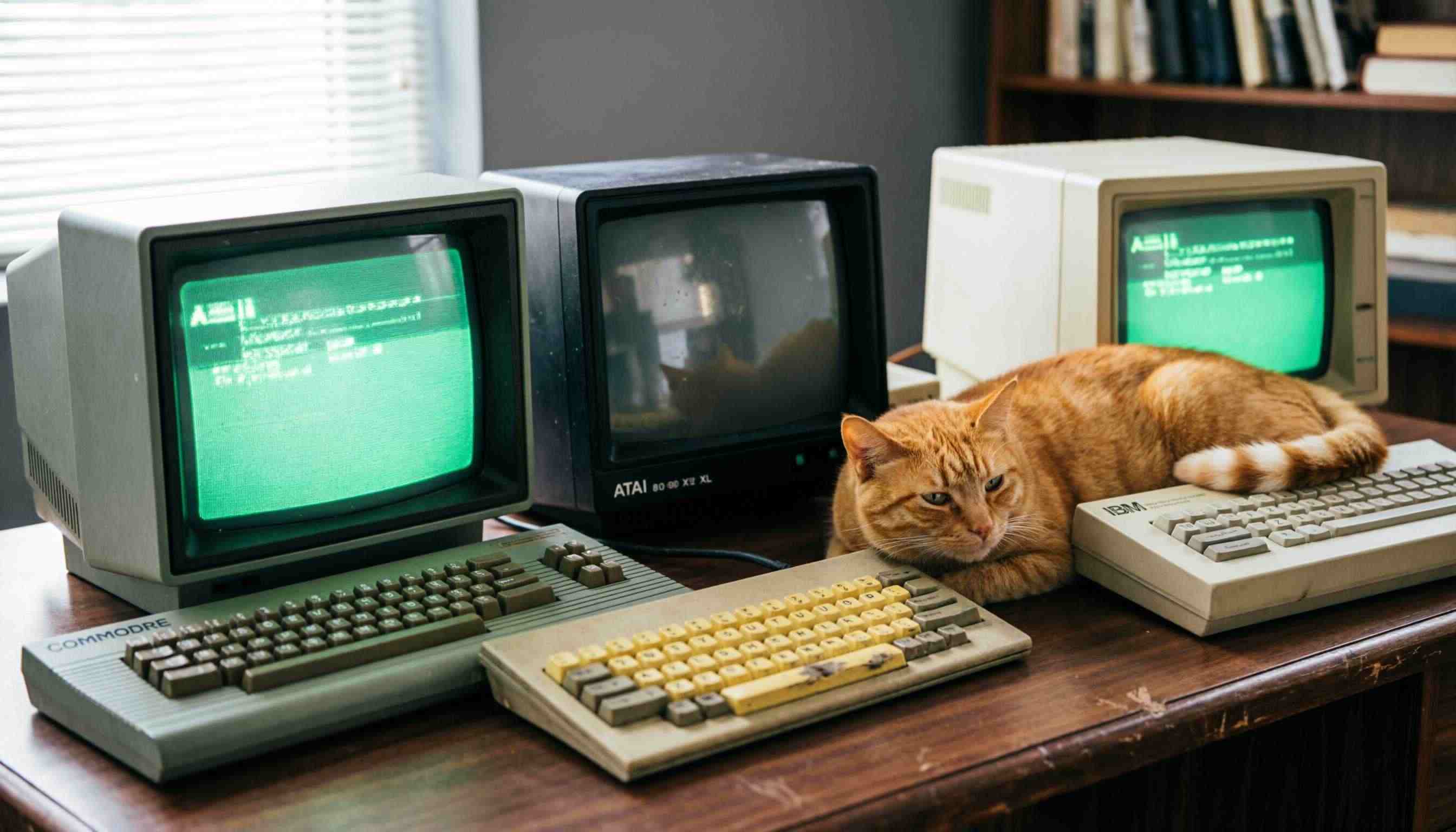
System Overview
This overview dissects the technical architectures and key economic data of the four most influential systems in the history of home computing:
- Commodore 64 (C64): The undefeated, indestructible king of the 8-bit era.
- AMSTRAD/Schneider CPC 6128: The compact, razor-sharp all-in-one workhorse with a built-in drive.
- Commodore Amiga 500: The revolutionary 16-bit multimedia masterpiece with unbeatable sound.
- Atari ST: The high-resolution monochrome specialist and favorite of music studios everywhere.
Commodore 64 (C64)
Origins & History
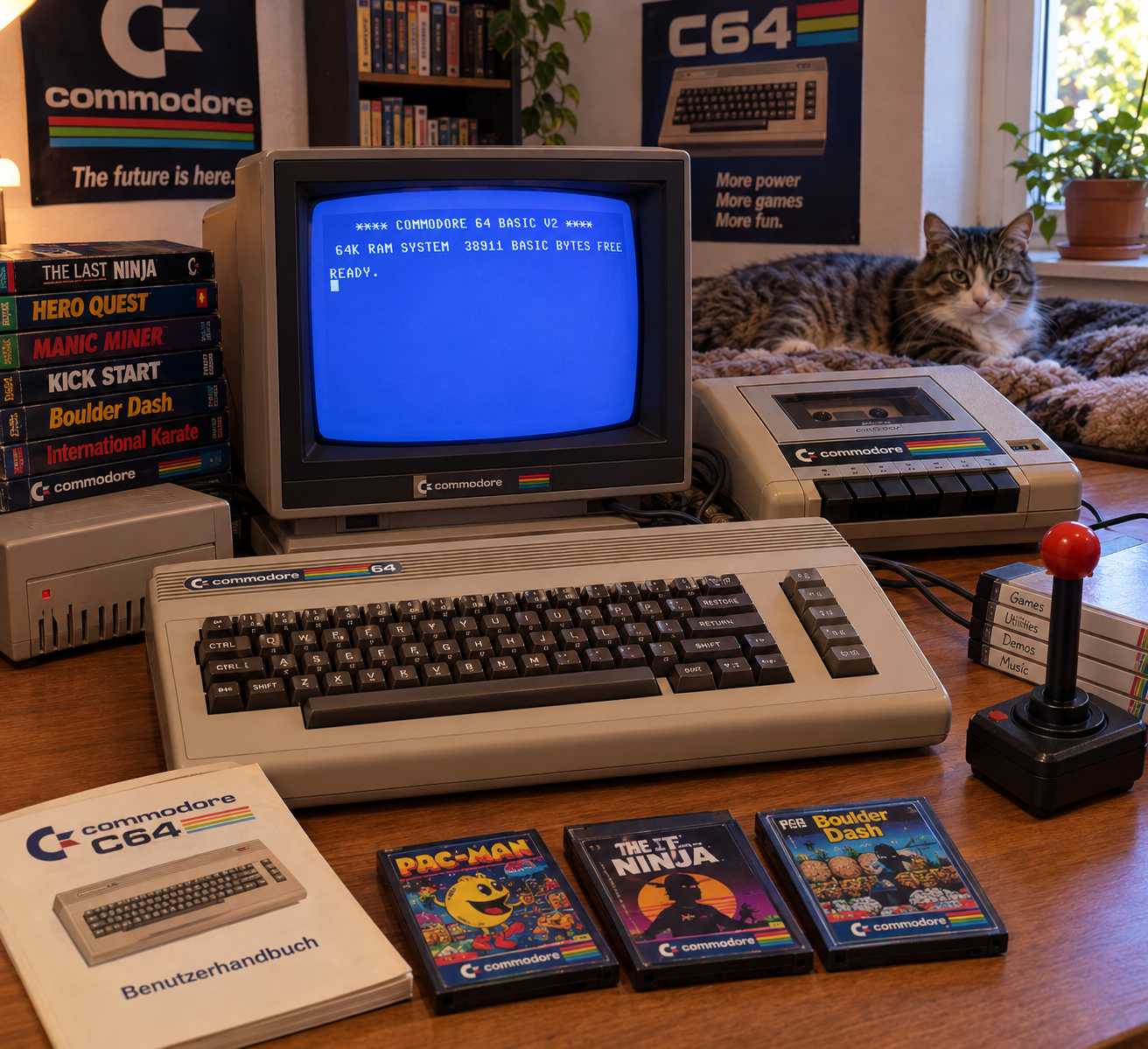
The C64 was developed by Commodore Business Machines under the leadership of Jack Tramiel. The primary goal was to create an affordable computer featuring graphics and sound capabilities (VIC-II and SID) originally intended for arcade machines. It went on to become the best-selling home computer worldwide.
Economic Figures
Sales began in Germany in the spring of 1983. The launch price was a hefty 1,495 DM (equivalent to approximately 764 EUR).
Technical Specifications
- Processor: MOS Technology 6510 (approx. 0.985 MHz PAL)
- Memory: 64 KB RAM (effectively usable for BASIC: 38,911 bytes)
- Graphics: VIC-II (320x200 pixels, 16 colors, hardware sprites)
- Sound: MOS Technology 6581/8580 SID (3 channels, legendary sound chip)
Top Favorite Games
- Pirates!
- The Great Giana Sisters
- Montezuma's Revenge
AMSTRAD/Schneider CPC 6128
Origins & History
The CPC series, developed by Amstrad in Great Britain, was marketed in Germany under the established AMSTRAD/Schneider brand. The CPC 6128 was the undisputed flagship of the 8-bit series; with its integrated 3-inch floppy disk drive and included monitor, it was specifically targeted at professional home users and offices.
Commercial Details
Sales began in Germany in late summer 1985. The launch price for the complete package—including the legendary green monitor—was 1,198 DM (equivalent to approximately 612 EUR).
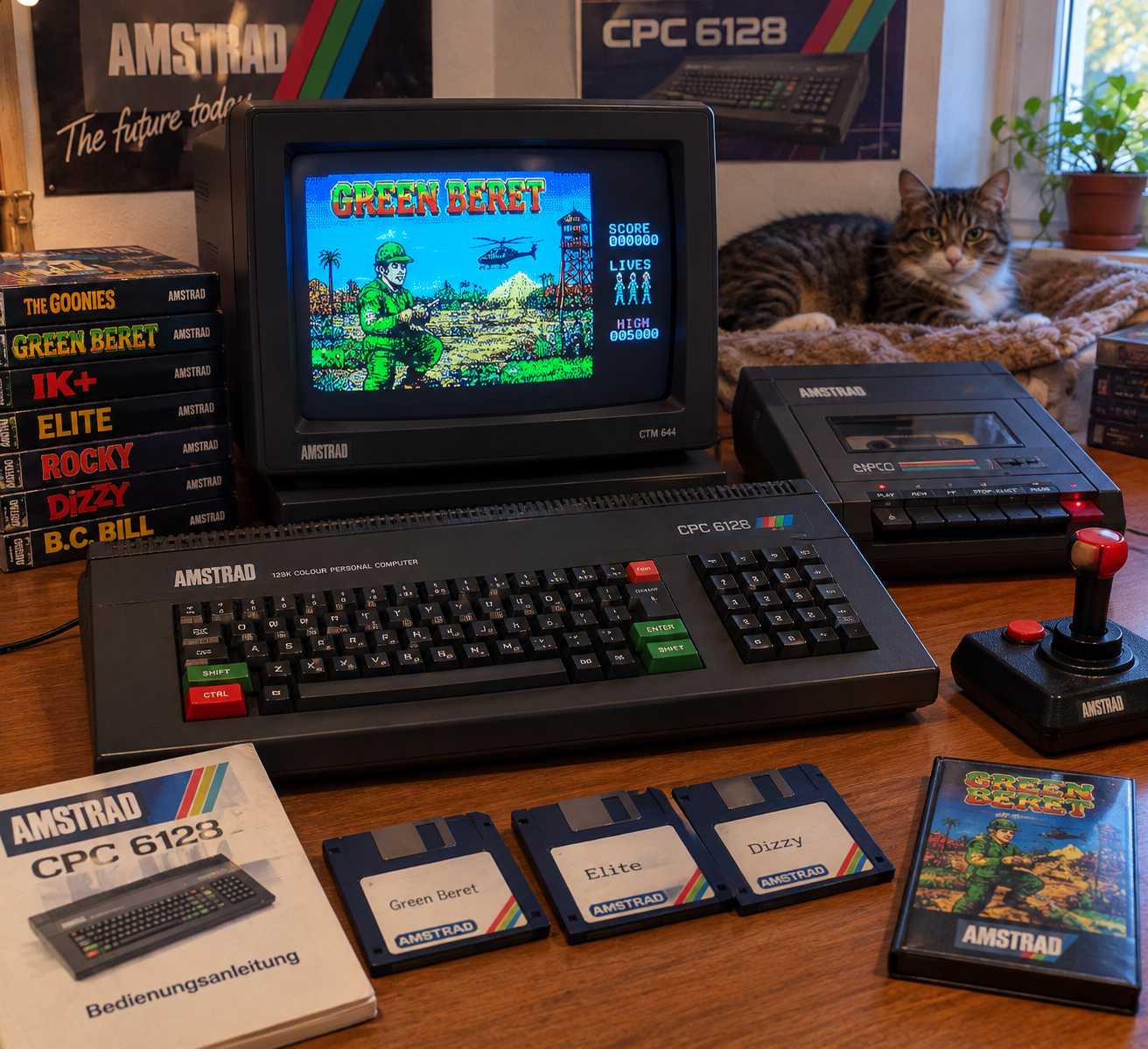
A distinctive feature of the CPC architecture: The AMSDOS operating system and the crisp CP/M environment turned the computer into a serious work machine that was far superior to the C64 for everyday office tasks.
Technical Specifications
- Processor: Zilog Z80A (4.0 MHz, effectively slowed down by video cycles)
- Memory: 128 KB RAM (bank switching)
- Graphics: CRTC 6845 (three modes: up to 640x200 pixels, max. 16 colors from a palette of 27)
- Sound: General Instrument AY-3-8912 (3 channels, stereo output)
Top Favorite Games
- Barbarian
- Stryfe
- The Sentinel
Commodore Amiga 500
Origins & History
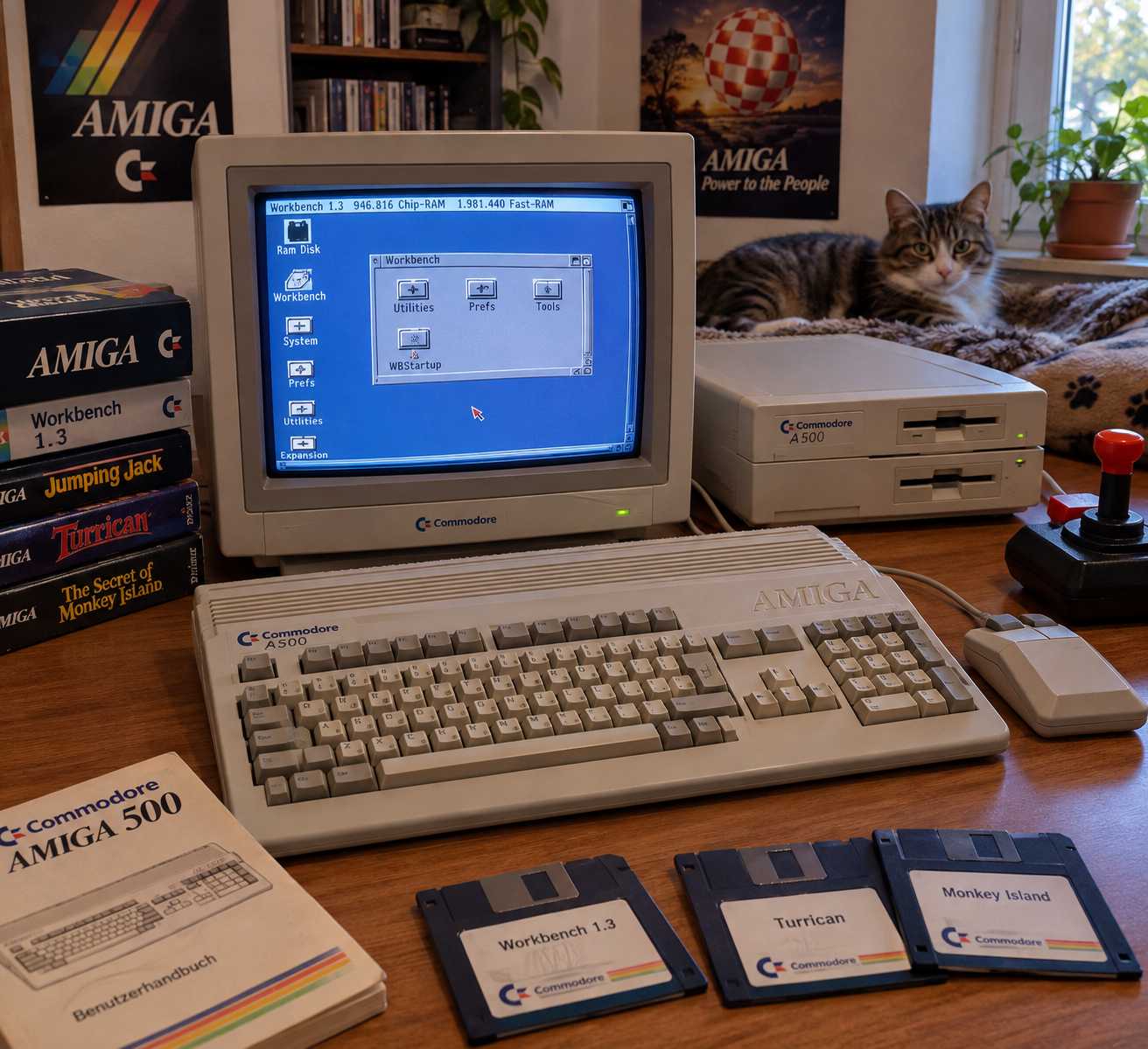
The Amiga was originally developed by the Amiga Corporation—led by hardware genius Jay Miner—before Commodore acquired the groundbreaking project. The Amiga 500 was designed as an affordable, low-cost model; it outperformed the competition thanks to its custom chips (Agnus, Denise, and Paula), which handled graphics and sound processing entirely independently of the main CPU.
Commercial Details
Sales launched in Germany in the autumn of 1987. The introductory price was 1,248 DM (equivalent to approximately 638 EUR).
Technical Specifications
- Processor: Motorola 68000 (7.09 MHz PAL)
- Memory: 512 KB Chip RAM (easily expandable via the famous trapdoor)
- Graphics: Original Chip Set / OCS (up to 4,096 colors simultaneously in HAM mode)
- Sound: Paula chip (4 channels, 8-bit PCM stereo, Paula DMA)
Top Favorite Games
- The Secret of Monkey Island
- R-Type
- Lords of the Rising Sun
Atari ST
Origins & History
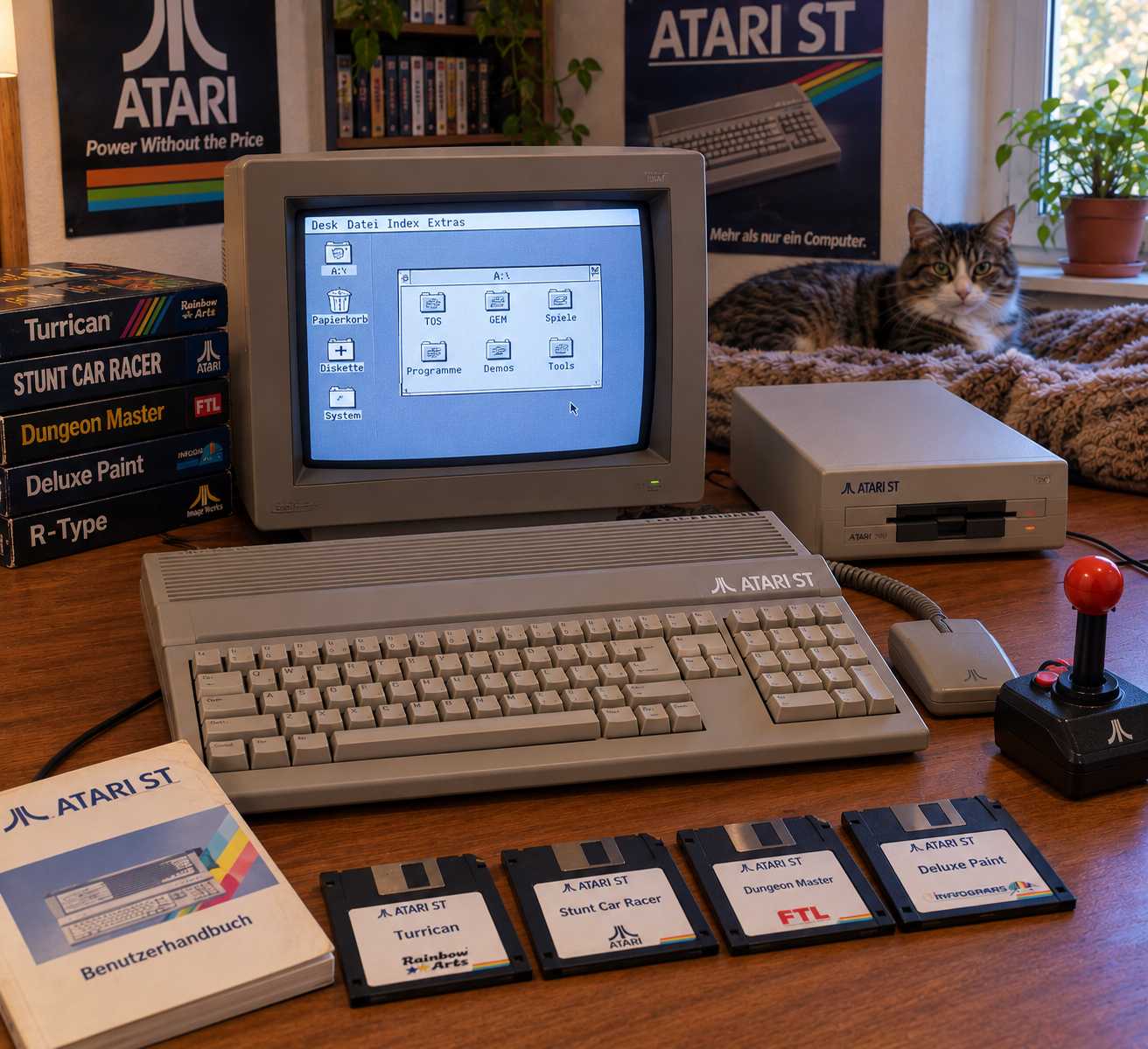
After leaving Commodore following a dispute and acquiring Atari, Jack Tramiel drove the development of the ST ("Sixteen/Thirty-Two") at breakneck speed to beat the Amiga to market. Thanks to its ultra-high-resolution, flicker-free monochrome display (SM124 monitor) and built-in MIDI interfaces, the system became a global standard in music studios and professional editorial offices.
Key Economic Figures
Sales launched in Germany in the spring of 1985. The introductory price for the 520ST, including the monochrome monitor, was 1,648 DM (equivalent to approx. 842 EUR).
Technical Specifications
- Processor: Motorola 68000 (8.0 MHz)
- Memory: 512 KB (520ST) or 1024 KB (1040ST) RAM
- Graphics: Shifter chip (High resolution: 640x400 pixels monochrome at an extremely stable 71 Hz)
- Sound: Yamaha YM2149 (Programmable Sound Generator, 3 channels)
Top Favorite Games
- Dungeon Master
- OOIDS
- Bolo
Final Thoughts
Whether the C64, the Amstrad/Schneider CPC, the Amiga 500, or the Atari ST—each of these systems pushed the boundaries of what was technologically possible at the time in its own unique way and forms the unshakable foundation of today's computing infrastructure.