Legendary Retro Games: Masterpieces That Defined Genres
A crypto-forensic look at three milestones in gaming history that squeezed the absolute most out of the C64, Atari ST, and Amiga.
Sid Meier's Pirates! (C64)
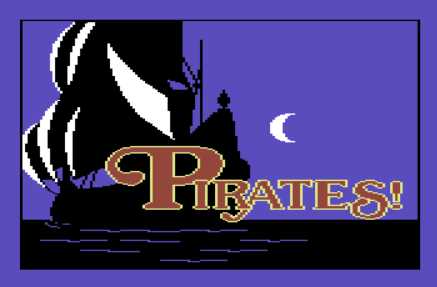
Released in 1987, Sid Meier's masterpiece remains a blueprint for non-linear design. You play a privateer in the Caribbean, and the game blends economic simulation, sword-fighting raids, naval battles, and navigation into one open-ended career. A dynamic map where towns change nationality and ships sail in real time, all squeezed out of 64 KB. The most charming detail: The entire menu system was written in BASIC, on a machine where most commercial games were hand-tuned assembly.
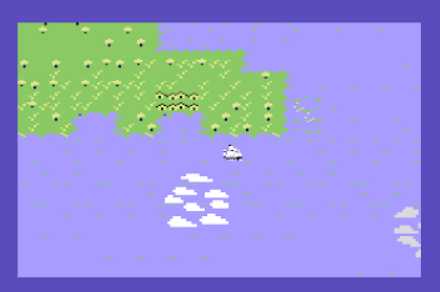
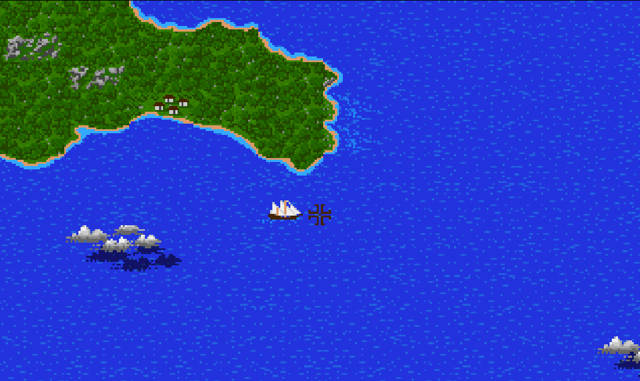
I used to photocopy the in-game map so I could make notes on it. As I found each map fragment, I'd draw the sections onto my paper copy, so in later games I could find family members or treasure much faster. After a while I had a personal atlas of the Caribbean built up from fragments.
That's the kind of game Pirates! is: it hands you a map and quietly expects you to become a cartographer.
Why I play the Amiga version
The C64 original is the historical landmark, but my favorite is the Amiga version. Better presentation, and the ability to split your fleet, which changes how you approach the whole game. I play it on my original A500, upgraded to 1 MB with a second floppy drive, or on WinUAE when I don't feel like swapping floppies.
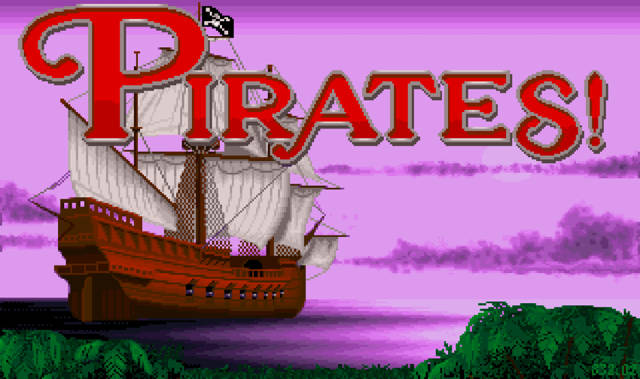
The game came on two disks, plus a third to save your game, three disks in rotation at all times. That's where the second drive pays off: keep the game disks mounted, swap only the save disk.
Tactics
Read the manual. The 80-page manual is not optional. Once you've studied the sword-fighting animation sequences you can read your opponent's moves and react. You can wear an enemy crew down to one man just by defending, then land the final strike, essential for capturing cities.
Pick health as your special ability. It extends your career and lets you collect more land titles and money.
Exploit the copy protection. The copy-protection screen actually tells you where the treasure fleet and silver train are. Being in that area increases your chances of finding them. Check the date in the menu.
Wait to marry until you have a high title and plenty of land. That's what appeals to the prettiest governor's daughters.
Hunt the family members first. They know where your relatives are, and each holds a piece of the treasure map.
Learn to read the map fragments. They share the same signature details as the game map. Mountains, coastlines, reefs. I got so good at it that eventually a single fragment was enough to find the treasure.
What the map taught me
The side effect of all that photocopying: By spending so much time sailing the Caribbean in a game, I learned the real geography of the region without realizing it. Where the islands sit, which passages run between them, how the coastlines fit. Pirates! taught me real-world geography.
So who says playing games is a waste of time?
A note on the National Geographic detail
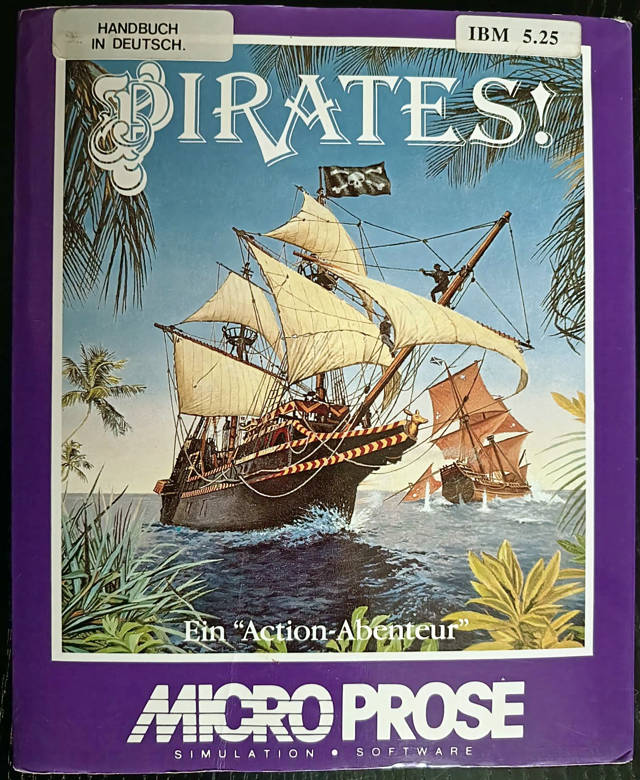
There's a nice historical touch on the European box art, too. The ship depicted is the Golden Hind, the vessel Francis Drake used to circumnavigate the globe starting in 1577. The artwork itself is an almost one-to-one copy of a National Geographic photograph of the Golden Hind replica, taken by Gordon Gahan and published in the February 1975 issue. Years later I visited that same replica, built in 1973 and then sitting in a dry dock in London. Seeing the real thing gave the game's naval battles a different weight.
The source article confirms that the cover image and a separate illustration by Bruce Friesch were both copied from the same Gordon Gahan photograph. The user's "almost one-to-one" phrasing is accurate: the angles of the ships are identical, the sailor at the prow is present, and the only real changes are the Jolly Roger replacing the British flag and some added waves for action. This is a genuinely unique, verifiable fact that adds real substance to the article, exactly the kind of first-hand, research-backed detail that helps with the content, quality assessment you're working on.
Additional databases: You can find detailed reviews, manuals, and fan ratings for this classic at:
Lemon64
Lemonamiga
Dungeon Master (Atari ST)
The Real-Time Dungeon Revolution
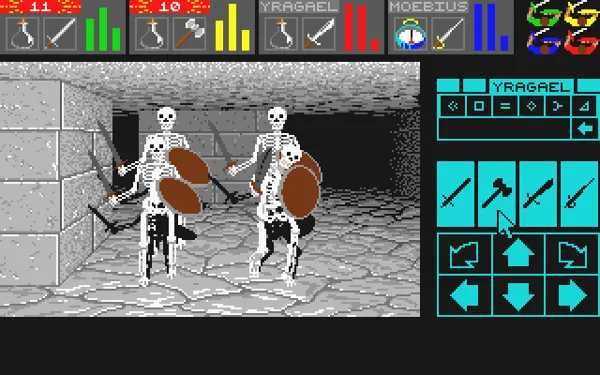
When FTL Games released Dungeon Master for the Atari ST in 1987, the role-playing game genre changed overnight. Instead of navigating rigid grids in a turn-based manner, the player moved through a fluid, real-time, pseudo-3D world.
The game was a technical marvel: it introduced a rune-based magic system grounded in physics, featured revolutionary directional sound design, and utilized the Atari ST’s mouse controls for an incredibly intuitive drag-and-drop inventory. It became the best-selling game on the ST platform.
Additional databases: Archived reviews and technical details about the game can be found in the encyclopedia at Atarimania.
Populous (Amiga)
When Players Became Gods
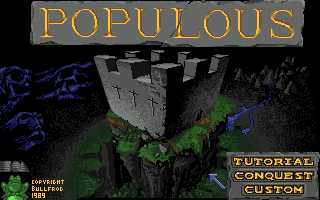
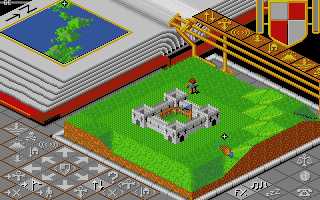
In 1989, Peter Molyneux unleashed a completely new genre with Populous on the Commodore Amiga: the god game. The player controls the destiny of a people by directly manipulating the landscape to create flat land for settlements and unleash catastrophes upon the opposing believers.
The Amiga version stood out thanks to its colorful, isometric graphics and the unmistakable sound of a drumming heartbeat, which audibly reinforced the power of the player's deity.
Additional databases: You can find comprehensive information about the game, box art scans, and disk images directly on Lemon Amiga.
System Conversions & Ports
The commercial success of these masterpieces led to them being ported to almost all competing systems amidst the platform wars. Here are the key historical milestones regarding their conversions:
- Populous: Conversion for the Amiga (1989) | Ported to Atari ST (1989), MS-DOS (1989), Sega Mega Drive (1990), and Super Nintendo (1990).
- Sid Meier's Pirates!: Initial release on C64 (1987) | Converted for the Apple II (1987), Atari ST (1989), Amiga (1990), and NES (1991).
- Dungeon Master: Initial release on Atari ST (1987) | Converted for the Amiga (1988), MS-DOS (1992), Super Nintendo (1992), and PC-98.
Final Thoughts
These three titles impressively demonstrate that graphical limitations did not stifle the developers' creativity but rather fueled it. They invented game mechanics that endure in modern productions to this day.